

Get Ready to Prepare Vaccines
The Centers for Disease Control and Prevention recommends drawing up vaccines just before vaccine administration. A clean environment free from distractions should be used to prepare vaccines to prevent errors from occurring during vaccine preparation. Hand hygiene should be performed before preparing vaccines. Vaccines should be prepared for one patient at a time, and the manufacturer’s package insert should be consulted for product-specific directions on how to prepare the vaccine (CDC, 2021).
Make Sure to Choose the Correct Vaccine:
- Proper Vaccine Handling:
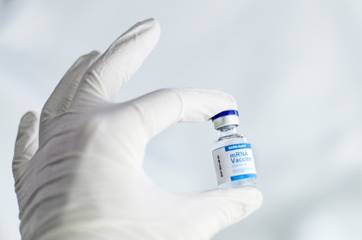
Since there may be several vaccines stored in the same refrigerator, it is critical to ensure the correct vaccine is chosen for administration. Always check the label to ensure the correct vaccine (and diluent if needed) has been selected before drawing up the dose for administration.
Inspect the vaccine packaging to ensure it is not damaged or contaminated before using it. Storage temperatures should be verified to ensure the vaccine has been stored properly (CDC, 2021).
- Vaccine Packaging:
Vaccines are available in several different containers, including multi-dose vials, single-dose vials, prefilled syringes, oral applicators, and even a nasal sprayer. Single-dose vials contain one dose of a vaccine for one patient. They are designed to be punctured with a needle once and discarded after the dose is withdrawn, so preservatives to prevent microorganism growth in the vial are unnecessary. Some single-dose vials contain slightly more vaccine than needed for one patient.
When preparing a vaccine, it is important to ensure the appropriate amount is drawn out of the vial and the remainder discarded. The excess vaccine remaining after a dose is withdrawn should never be saved or combined with other leftovers to administer the vaccine to another person (CDC, 2021).
- Using Multi-dose Vaccine Vials:
Multi-dose vials contain more than one dose of a vaccine. Preservatives are typically utilized to help prevent the growth of harmful microbes in multi-dose vials because they are punctured more than once to retrieve doses for multiple patients.
The manufacturer’s package insert will specify the number of doses that should be withdrawn from a single multi-dose vial. After the specified number of doses has been removed, the remainder should be discarded.
- Handling Multi-dose Vials:
Partial doses should not be withdrawn and combined with remnants from other multi-dose vials to make a single dose due to the risk of contamination or inaccurate dosing.
When using a multi-dose vial for more than one patient, the vial should be kept in a clean area dedicated to preparing medications and away from patient treatment areas to prevent contamination (CDC, 2021).
- Using Prefilled Vaccine Syringes:
Prefilled syringes are syringes prepared under sterile conditions by the vaccine manufacturer that contains the exact amount of vaccine needed for a single dose. They are typically wrapped in individuals and are designed to be used for one injection for one patient. Since they are only used once, they do not contain preservatives. Once they are removed from their sterile packaging, the vaccine should be used or discarded by the end of the workday (CDC, 2021).
Oral applicators contain a single dose of a vaccine administered orally. This type of packaging is utilized for the oral rotavirus vaccine and does not contain preservatives. There is also a nasal sprayer that is used to administer the live attenuated influenza vaccine (CDC, 2021).).
Expiration Date
Before preparing a vaccine, the expiration date should be checked to ensure it has not passed. Products with expiration dates that only have a month, and year noted can be used until the end of the last day of the month printed on the product packaging. If a day is included in the expiration date, the product can be used through the end of the day. Products that have been contaminated or otherwise compromised should be discarded immediately, regardless of the expiration date (CDC, 2021).
Beyond-use dates (BUD) are used in certain instances to shorten a product’s expiration date. When vaccines are reconstituted, the period in which they must be used or discarded is limited. The period is different for each vaccine and can be found in the manufacturer’s package insert; for example, some vaccines are only good for 30 minutes after reconstitution, and if not used within that time, they must be discarded.
In addition, some multi-dose vials have a limited time frame for use after they have been punctured with a needle; for example, some state in their package insert that they must be used within 28 days of the first puncture.
Beyond-use dates may also be utilized when vaccines have been stored inappropriately when depending on the situation, the manufacturer may allow the vaccine to be used within a shorter timeframe than the expiration date printed on the label. Beyond use, dates should never exceed the manufacturer’s expiration date and should be recorded on the label with the initials of the person who calculated the BUD (CDC, 2021).
Choosing Supplies for Vaccine Administration
Scenario: The Occupational Safety and Health Administration (OSHA) requires that vaccines be administered in all clinical settings using safety-engineered injection devices, such as syringes that shield the needle immediately after injection.
This requirement is designed to decrease the risk of needlesticks and disease transmission. Syringes and needles are designed to be used for a single patient – neither should ever be reused.
The packaging should be checked before use, and supplies with compromised packaging should be discarded. If the needle or syringe has an expiration date, it must be checked and observed; expired supplies should never be used (CDC, 2021).
What would you do?
You are preparing to administer an IM vaccine injection to Terrance, a 25-year-old male weighing 160 pounds. Which of the following would be the most appropriate?
– Administer in the deltoid muscle using a 5/8-inch needle
– Administer in the anterolateral thigh using a 1-inch needle
– Administer in the deltoid muscle using a 1-to-1.5-inch needle
– Administer in the anterolateral thigh using a 5/8-inch needle
Based upon CDC recommendations, option C would be the most appropriate based on the patient’s age, gender, and weight.
Selecting Needles:
Injectable vaccines can be administered with either 1ml or 3ml syringes. Needles are classified by their length, typically in inches, as well as the thickness of the needle, known as its gauge.
When choosing a needle, clinical judgment should be used to ensure the vaccine will reach the appropriate tissue to create its optimal immune response and decrease the risk of injection site reactions.
Needle selection must factor in the patient’s age, gender, weight, injection site and technique, and the route of administration. The Table on the next page can help with needle selection in specific circumstances (CDC, 2021).
Needle Selection Table
Needle length and injection site of IM injections for children aged ≤18 years (by age) and adults aged ≥19 years (by sex and weight)
| Age Group | Needle Length | Injection Site |
| Neonates(a) | 5/8 inch (16 mm) | Anterolateral thigh |
| Infants, 1-12 months | 1 inch (25 mm) | Anterolateral thigh |
| Toddlers, 1-2 years | 1-1.25 inch (25-32 mm) 5/8-1 inch (16-25 mm) | Anterolateral thigh Deltoid muscle of arm |
| Children, 3-10 years | 5/8-1 inch (16-25 mm) 1-1.25 inches (25-32 mm) | Deltoid muscle of arm Anterolateral thigh |
| Children, 11-18 years | 5/8-1 inch (16-25 mm) 1-1.5 inches (25-38 mm) | Deltoid muscle of arm(c) Anterolateral thigh |
| Adults (≥19 years) | …… | ……. |
| Men and women, <60 kg (130 lbs) | 1 inch (25 mm) | Deltoid muscle of arms |
| Age group | Needle Length | Injection Site |
| Men and women, 60-70 kg (130-152 lbs) | 1 inch (25 mm) | Deltoid muscle of arms |
| Men, 70-118 kg (152-260 lbs) Women, 70-90 kg (152-200 lbs) | 1-1.5 inches (25-38 mm) | 1-1.5 inches (25-38 mm) |
| Men, >118 kg (260 lbs) Women, >90 kg (200 lbs) | 1.5 inches (38 mm) | Deltoid muscle of arms |
| Men and women, any weight | 1.5 inches (38 mm)(e) | Anterolateral thigh |
Abbreviation: IM = intramuscular. Source: CDC, 2021.
(a)First 28 days of life.
(b) If the skin is stretched tightly and subcutaneous tissues are not bunched.
(c) Preferred site.
(d) Some experts recommend a 5/8-inch needle for men and women who weigh <60 kg, if used, skin must be stretched tightly (do not bunch subcutaneous tissue)
(e) Some experts recommend a 1-inch needle if the skin is stretched tightly and subcutaneous tissues are not bunched.
Reconstituting and Drawing Vaccines into Syringes
- Reconstituting Vaccine:
Some vaccines come in two vials: one containing a dry powder or pellet and one containing a liquid diluent. These two must be combined to produce the vaccine in a process called reconstitution. Both parts are provided by the vaccine manufacturer and should be combined according to the manufacturer’s recommendations found in the product’s package insert.
Typically, this involves drawing all of the diluents out of its vial and injecting it slowly into the vial containing the dry vaccine. Only the diluent provided by the manufacturer should be used to reconstitute a vaccine because they are specifically designed to match their corresponding vaccine’s chemical, volume, and pH requirements. Vaccine doses reconstituted with the wrong diluent are considered invalid and must be repeated with the correct diluent (CDC, 2021).
- Timing and Handling of Reconstituted Vaccines
Reconstitution should occur just before vaccine administration to prevent waste. Each vaccine manufacturer specifies the time frame that the vaccine must be used, so the preparer can calculate its new beyond-use date. If the vaccine is not used within this timeframe, it must be discarded. The needle used to reconstitute the vaccine may be used for administration unless the needle is damaged or contaminated (CDC, 2021).
- Preparing Vaccine Vial Stoppers:
Unopened vaccine vials come with caps on them that serve as a dust cover over the stopper. The cap does not guarantee that the stopper underneath is sterile, so the top should be wiped using a sterile alcohol swab and friction to remove any potential microorganisms. The alcohol wiped on the stopper will dry quickly while the needle is prepared (CDC, 2021).
- Mixing and Inspecting Vaccine Vials:
The vial should be agitated before drawing out a dose to ensure the vaccine is mixed thoroughly. Some manufacturers require gentle mixing to prevent bubbles from forming, so verify the mixing process provided in the manufacturer’s package insert before drawing the vaccine into the syringe. In addition, vials should be visually inspected before drawing up a dose to verify if any discoloration or contaminants are present. Vials with noted issues should not be used (CDC, 2021).
- Best Practices for Drawing up Vaccine Doses:
Vaccine doses should be drawn up with a brand-new needle and syringe; used syringes or needles should never be used. The syringe should be used to draw up the vaccine from only one vial. Partial doses from separate vials and different vaccine products should not be drawn into the same syringe. Once the vaccine dose has been drawn into a syringe, it should not be transferred to another syringe. After drawing up a dose, the syringe should be labeled with the vaccine name to prevent confusion (CDC, 2021).
Pre-drawing Vaccines
Scenario: Your clinic is preparing for a flu vaccination event. The day before the event, one of the nurses asked if she should pre-draw some syringes to save time at the event. What is your response?
Solution A: Avoid Pre-Drawing Vaccine Doses: Vaccines should only be drawn up immediately before administration. Syringes are designed for injecting products immediately after drawing them up – they are not designed to be used for vaccine or drug storage.
Vaccines that do not contain preservatives can become contaminated with microorganism growth if stored in syringes. Vaccine potency can also be reduced over time through reactions with polymers found in plastic syringes. In addition, pre-drawing vaccine doses can result in vaccine waste if the doses are not used (CDC, 2021).
Solution B: Avoid Pre-Drawing Vaccine Doses: Vaccine manufacturers do not recommend pre-drawing doses of vaccines, even for large vaccine administration events. The CDC recommends using manufacturer-prefilled syringes for these events if possible.
If vaccine doses must be prepared for large events, the CDC recommends drawing up vaccine doses only after arriving on-site at the vaccine administration location and using a separate station to prepare each type of vaccine to prevent errors.
No more than one multi-dose vial, or ten doses, should be drawn up at one time. Clinic operators should monitor the flow of patients to ensure unnecessary doses are not drawn up.
Solution C: Recommendations for Large Vaccine Administration Events: A reconstituted vaccine should only be drawn up immediately before administration. If reconstituted doses are drawn up and not used within 30 minutes, the manufacturer’s guidance should be followed for time limits and storage requirements.
Pre-drawn products should never be transferred back to the vial for storage. Any unused pre-drawn vaccines should be discarded at the end of the workday (CDC, 2021).