
Non-Psychotic Disorder: Neurotic disorders are a group of mental disorders characterized by chronic distress (such as anxiety, fear, or depression) in which the individual maintains insight and contact with reality and does not exhibit delusions or hallucinations. Some examples of non-psychotic disorders are Panic disorder, Obsessive-compulsive disorder, Generalized anxiety disorder, Social anxiety disorder, post-traumatic stress disorder, persistent depressive disorder, Somatization disorder, Hypochondriasis, Neurasthenia.
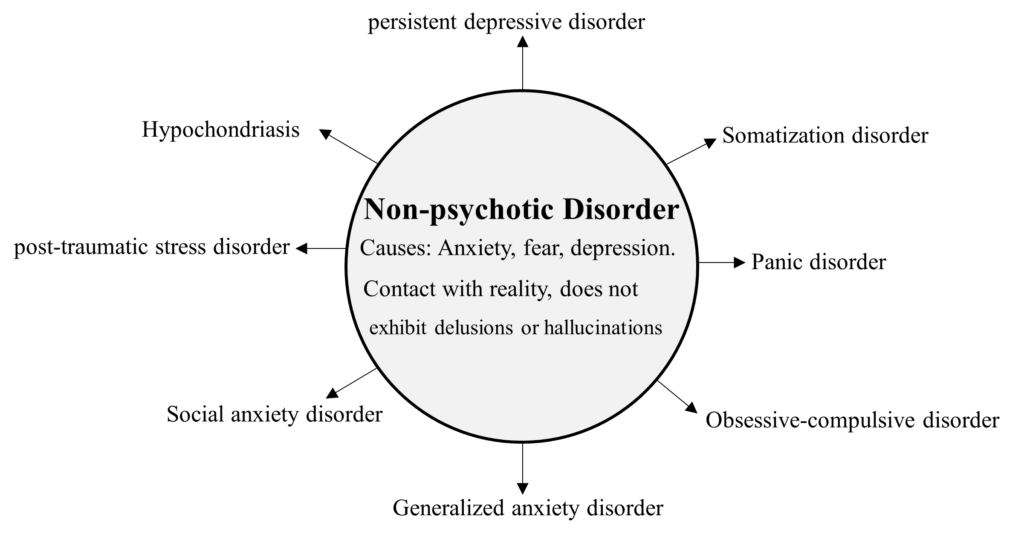
[Note: Psychotic Disorder: Psychotic disorders are a group of severe mental disorders characterized by a loss of contact with reality, manifested by symptoms such as delusions, hallucinations, and disorganized thinking, often accompanied by impaired insight. Some examples of Psychotic disorders are Schizophrenia, Delusional disorder, Brief psychotic disorder, Substance-induced psychotic disorder, Psychotic depression]
GENERALIZED ANXIETY DISORDER (GAD)
Generalized Anxiety Disorder (GAD) is a chronic neurotic disorder characterized by excessive, persistent, and uncontrollable worry about multiple aspects of life, lasting for at least 6 months, and accompanied by physical and psychological symptoms.
Key features:
The key features of Generalized Anxiety Disorder (GAD) include persistent and excessive worry about everyday life issues such as health, work, family, and finances. This worry is often difficult to control and may feel overwhelming to the individual. The symptoms are present on most days and typically persist for a period of six months or longer. As a result, the condition leads to significant distress and can impair social, occupational, or other important areas of functioning.
Common symptoms:
At least 3 or more of the following (in adults):
- Restlessness or feeling “on edge”
- Easily fatigued
- Difficulty concentrating (“mind goes blank”)
- Irritability
- Muscle tension
- Sleep disturbance (insomnia, poor sleep)
Causes / risk factors:
- Genetic predisposition
- Imbalance of neurotransmitters (e.g., serotonin, GABA)
- Chronic stress or trauma
- Personality traits (e.g., high sensitivity, perfectionism)
Diagnosis of GAD:
The diagnosis of Generalized Anxiety Disorder (GAD) is based on specific clinical criteria. It is characterized by excessive anxiety and worry occurring more days than not for at least six months, involving multiple events or activities such as work, health, family, or finances. The individual finds it difficult to control the worry, which tends to be persistent and overwhelming. In addition, the anxiety is associated with at least three symptoms (only one required in children), including restlessness or feeling “on edge,” easy fatigability, difficulty concentrating or episodes where the mind goes blank, irritability, muscle tension, and sleep disturbances such as difficulty falling or staying asleep or experiencing restless sleep. Furthermore, the condition must cause clinically significant distress or impairment in social, occupational, or other important areas of functioning. Finally, the symptoms should not be attributable to the effects of substances, medications, or underlying medical conditions such as hyperthyroidism.
Treatment:
The treatment of Generalized Anxiety Disorder (GAD) involves a combination of psychotherapy, pharmacotherapy, and supportive lifestyle measures. Among non-pharmacological approaches, Cognitive Behavioral Therapy is considered the first-line treatment, as it helps patients identify and modify maladaptive thought patterns, reduce excessive worry, and develop effective coping strategies. Mindfulness-based therapies and relaxation techniques may also be beneficial adjuncts.
Pharmacological treatment is indicated in moderate to severe cases or when psychotherapy alone is insufficient. First-line medications include Selective Serotonin Reuptake Inhibitors such as Sertraline and Escitalopram, as well as Serotonin-Norepinephrine Reuptake Inhibitors like Venlafaxine and Duloxetine. These drugs are preferred due to their efficacy and safety profile, although they may take a few weeks to achieve full therapeutic effect. For short-term relief of acute anxiety symptoms, Benzodiazepines such as Diazepam may be used cautiously because of the risk of dependence and sedation. Other alternatives include Buspirone, Pregabalin, and Hydroxyzine, which can be used based on patient needs and tolerability.
In addition to these treatments, lifestyle modifications such as regular physical exercise, proper sleep hygiene, stress management, and avoidance of caffeine and other stimulants play an important supportive role. Overall, an individualized and combined treatment approach is most effective in managing GAD and improving the patient’s quality of life.